
Sourcing collagen based bioinks in 2026 requires more than comparing prices or checking a supplier catalogue. The material’s origin, extraction method, purity, and batch consistency can directly affect printed tissue performance. A medical-grade collagen powder may look suitable, yet its viscosity can change after hydration. Small differences matter.
Dr. Jennifer A. Lewis, a leading bioprinting researcher, has stated, “The ultimate goal is to fabricate living tissues and organs that can be implanted into patients.” Her point remains practical for procurement teams. A collagen based bioinks supplier should explain how its product supports cell survival, structural stability, and reproducible printing. Ask for certificates of analysis, endotoxin data, sterility information, gelation conditions, and rheological profiles. Request samples from multiple lots. Test them under your actual printing temperature and nozzle settings.
Do not trust impressive photographs alone. A smooth lattice may still collapse after printing. A strong gel may restrict cell movement. Those trade-offs deserve careful review. Suppliers should also disclose animal species, tissue source, crosslinking chemistry, and storage requirements. Traceability is essential when research moves toward clinical development.
The 2026 market may offer more customized collagen blends, decellularized formulations, and ready-to-use cartridges. However, “advanced” does not always mean reliable. Some claims remain difficult to compare because testing methods differ. This is where procurement teams can be imperfect. Early assumptions may fail.
A sound sourcing decision combines supplier audits, independent validation, and small-scale pilot printing. Choose evidence over marketing language. Your best material is not necessarily the most expensive one. It is the one that performs consistently in your workflow.
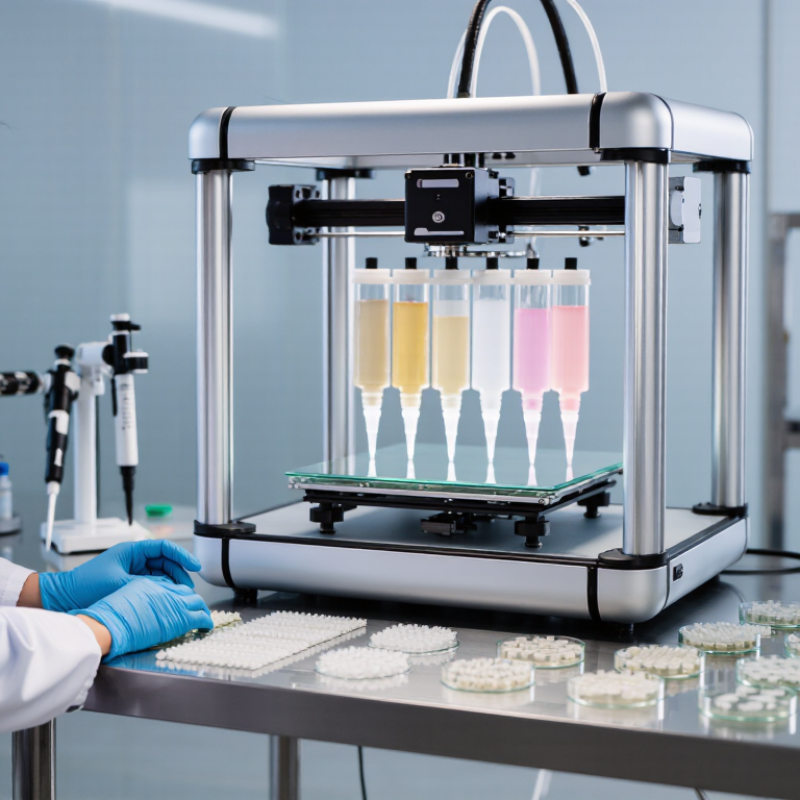
How to Source Collagen-Based Bioinks in 2026?
Collagen-based bioinks combine collagen with water, cells, and supporting polymers. They create hydrated scaffolds that resemble natural extracellular matrix. Their softness supports skin, cartilage, vascular, and organoid research. However, collagen alone often prints poorly. It can slump before crosslinking.
Grand View Research reported strong growth in the global 3D bioprinting market, with an estimated 18% annual growth rate through 2030. MarketsandMarkets projected the bioprinting market could approach USD 6.9 billion by 2029. These figures suggest wider demand for reliable collagen materials. They do not guarantee clinical success.
In 2026, sourcing should begin with collagen origin and tissue traceability. Ask for species information, extraction methods, residual chemicals, endotoxin limits, and lot-specific certificates. Type I collagen remains common, but tissue-specific blends may better support cartilage or vascular models. Check concentration, pH, viscosity, gelation temperature, and storage stability. Rheology data matters more than attractive product images.
Sterility needs careful review. A sterile label cannot replace validated testing. Compare gamma irradiation, filtration, and aseptic processing effects on gel strength. Test each lot with the intended printer and nozzle size. A lower-cost material may print smoothly yet reduce cell viability. No formulation is perfect. Researchers should record failed prints, not hide them. That imperfect evidence often improves sourcing decisions.

How to Source Collagen Based Bioinks in 2026?
Identify the required material properties before contacting suppliers. Extrusion printing needs steady shear-thinning behavior, rapid recovery, and sufficient yield stress. A useful starting window may be 0.1–10 Pa·s, but nozzle size and pressure change the result. Smaller nozzles demand lower viscosity. That can weaken printed shapes.
Collagen concentration, gelation temperature, crosslinking response, and degradation rate should match the intended tissue model. For cell-laden printing, assess cytocompatibility, endotoxin level, sterility method, and pH after preparation. Ask for batch-specific certificates, not only a technical brochure. The 2024 Grand View Research report estimated the global 3D bioprinting market at about US$2.1 billion in 2023, showing why material consistency is becoming commercially important.
For inkjet systems, low viscosity and controlled droplet formation matter more than extrusion strength. Light-assisted processes require predictable optical absorption and curing behavior. Record gelation time at the actual laboratory temperature. Small differences can alter pore size and cell distribution. I would also test several lots, because natural collagen can vary between batches. That limitation is easy to underestimate. Reports from ASTM International and ISO-based quality frameworks emphasize documented testing, traceability, and reproducible performance, but no single specification fits every bioprinting process.
Source matters. Bovine and porcine collagen remain widely used because their supply chains are mature and documentation is often detailed. However, they require careful review of animal origin, tissue processing, pathogen controls, and traceability. Marine collagen may offer a different sourcing profile, but its lower thermal stability can affect printing and gel formation. Recombinant collagen can provide tighter consistency, although cost and scale may limit early development.
Formulation changes performance significantly. Type I collagen supports many tissue-engineering applications, while methacrylated collagen enables light-activated crosslinking. Blending collagen with gelatin, alginate, or hyaluronic acid can improve viscosity, shape retention, and cell handling. Yet every added component creates another quality checkpoint. Ask for concentration, molecular weight, degree of modification, residual solvents, endotoxin levels, sterility data, and a complete certificate of analysis. Manufacturing evidence should include controlled production records, batch traceability, validated testing, and relevant biocompatibility assessments aligned with recognized medical-device standards. Small details matter. Sterilization can also reduce bioactivity or alter gelation behavior.
Tips: Compare at least three lots before approval. Request raw-material origin records, not only a sales specification. Test printability at the intended temperature and extrusion pressure. Keep samples from each lot for later comparison. No source is perfect. I would also record failed prints, because inconsistent results often reveal weaknesses that polished supplier documents miss. A qualified materials scientist should review the final selection before scale-up.
How to Source Collagen Based Bioinks in 2026?
Evaluate Suppliers Through Quality, Safety, and Traceability Criteria
Sourcing collagen-based bioinks requires more than comparing prices. Start by requesting specifications for collagen type, concentration, crosslinking behavior, pH, and viscosity. These details affect print resolution and cell compatibility. Ask for a current certificate of analysis for every batch. A generic document is not enough.
Safety records deserve equal attention. Review sterility testing, endotoxin limits, bioburden controls, and residual processing chemicals. Confirm whether the material is research-grade or intended for regulated development. Supplier quality systems should include controlled manufacturing, documented change management, and qualified testing laboratories. Visit the production site when possible. A polished website proves little.
Traceability should reach the original biological source and each processing step. Records should identify lot numbers, collection dates, purification stages, storage conditions, and shipping temperatures. Cold-chain damage may be invisible. Test retained samples after delivery, not only during supplier approval. I have seen checklists focus heavily on purity while overlooking viscosity drift between lots. That gap can disrupt an otherwise stable printing process. Supplier interviews also reveal useful details, such as how quickly they report deviations and replace questionable material. No system is perfect. Build room for requalification, independent testing, and honest review when results conflict.
Supplier evaluation checklist coverage across quality, safety, and traceability
The bars count the evidence checks in this procurement checklist, not supplier scores or measured industry data. Review material identity and consistency, assess safety risks for the intended application, and confirm lot-level origin and processing records. Applicable requirements and acceptance criteria depend on the bioink’s intended use and jurisdiction.
A 2026 sourcing plan for collagen-based bioinks should begin with the intended application, not a supplier catalogue. Define required print resolution, gelation conditions, and cell compatibility before requesting samples. Ask for collagen source, purification details, sterilization method, and lot-specific documentation. Small gaps matter. A missing traceability record can delay evaluation.
Test samples using the same workflow planned for production. Measure viscosity at relevant temperatures, extrusion consistency, gelation time, and shape retention after printing. Where cells are involved, assess viability with appropriate controls and compare results across lots. Record the printer settings, nozzle size, and handling time; these details can change outcomes. One test is not enough. Repeat key checks with more than one lot, and flag unexpected variation rather than explaining it away.
Scaling requires more than a larger order. Confirm forecast capacity, lead times, packaging conditions, and how supplier changes will be communicated. Request a clear specification and review its acceptance limits against your own test data. Keep a change-control record. It may feel tedious, but it helps separate process drift from material variation. Compliance depends on intended use and market, so map applicable quality and documentation requirements with qualified regulatory staff before committing. A polished certificate cannot replace a usable, reproducible bioink.
| Sourcing dimension | What to specify or verify | Testing and acceptance approach | Scale-up and compliance considerations |
|---|---|---|---|
| Collagen identity | Define collagen type (commonly Type I for structural matrices), tissue source, species, extraction method, and whether the material is native, atelocollagen, or chemically modified. | Review supplier characterization; confirm identity with suitable analytical methods, such as electrophoretic or spectroscopic characterization, where relevant to the intended use. | Set change-notification requirements for source, process, or site changes. Assess animal-origin material risks and applicable import, traceability, and product requirements for the target market. |
| Source and traceability | Request species and tissue documentation, country-of-origin information, lot identification, manufacturing-site details, and available animal-health or sourcing declarations. | Check that documentation is complete, internally consistent, and linked to the delivered lot. Define a process for resolving missing or conflicting records. | Confirm that traceability records can be retained throughout the product lifecycle. Requirements depend on intended application and jurisdiction; obtain regulatory advice when needed. |
| Purity and biological safety | Specify relevant limits or reporting expectations for residual processing chemicals, endotoxin, bioburden, and other process-related impurities. Do not assume a research-grade material meets a medical-use requirement. | Review lot-specific certificates of analysis and methods. Establish risk-based acceptance criteria appropriate to the application; evaluate cytotoxicity and other biological endpoints as part of the overall finished-material assessment. | Agree on test methods, sampling plans, out-of-specification handling, and notification of process changes. Sterility or endotoxin claims should be supported by appropriate validated methods and documentation. |
| Concentration and formulation | Specify collagen concentration, solvent or acid system, pH, ionic conditions, additives, and whether the product is supplied as a solution, suspension, or dry material. Concentration is application- and formulation-dependent. | Verify concentration and pH using defined methods. Test printability, extrusion behavior, shape retention, and gel formation using the intended printer, nozzle, and process conditions. | Freeze the formulation and preparation instructions before scale-up. Qualify any dilution, mixing, neutralization, or sterilizing filtration steps that could alter performance or recovery. |
| Rheology and printability | Define the intended printing temperature, extrusion method, nozzle geometry, and expected construct dimensions. Collagen rheology can vary with concentration, temperature, pH, and handling history. | Measure relevant flow behavior under documented conditions. Use a standardized print test to assess filament continuity, dimensional fidelity, layer stacking, and batch-to-batch variation. | Treat printer settings and bioink preparation as controlled process parameters. Requalify performance after equipment, scale, formulation, or supplier changes. |
| Gelation and crosslinking | Document the gelation trigger, temperature, time, pH adjustment, and any physical or chemical crosslinking step. Distinguish supplier specifications from end-user process conditions. | Test gelation time and structural stability under the intended workflow. Where crosslinkers are used, assess residuals and biological compatibility as appropriate to the application. | Control timing and temperature during manufacturing. Validate the complete process rather than relying on a material specification alone. |
| Storage and shipping | Obtain labeled storage conditions, light and moisture precautions, shelf life, shipping requirements, and instructions for thawing or reconstitution, if applicable. | Inspect incoming packaging and temperature records where required. Establish retest or stability checks after transport excursions and after opening or reconstitution. | Assess shipping lanes, customs documentation, and cold-chain capacity if specified by the supplier. Define inventory rotation and excursion-handling procedures. |
| Lot consistency | Request lot-specific results for critical attributes, including concentration, pH, appearance, and other agreed performance or safety measures. | Compare multiple lots in the same application-relevant assay. Set acceptance limits from development data rather than assuming a universal specification. | Use a documented lot-release checklist, retain samples where appropriate, and define a quality agreement covering deviations, complaints, and corrective actions. |
| Supplier qualification | Evaluate technical support, quality documentation, manufacturing controls, capacity, lead times, continuity planning, and responsiveness to audit or document requests. | Conduct a risk-based assessment of the supplier’s quality system and verify claims against available records. A certificate or marketing statement alone is not a complete qualification. | Identify a qualified backup source where feasible. Before switching sources, perform comparability testing and document any impact on the bioink or finished construct. |
| Scale-up and supply planning | Estimate demand by development phase, batch size, testing needs, expected yield, and safety stock. Ask suppliers about minimum order quantities and capacity constraints. | Run pilot-scale batches and compare critical material attributes and print outcomes with the development-scale process. | Agree on forecast cadence, allocation communication, lead-time expectations, and escalation contacts. Reassess supply risk as volumes and intended use evolve. |
| Regulatory and intended-use fit | State whether the material is for research, process development, preclinical work, or a regulated product pathway. Request documentation relevant to the actual intended use. | Build a traceable evidence package for material qualification, process controls, biological evaluation, and risk assessment. Requirements vary by product type and jurisdiction. | Do not infer regulatory suitability from “medical grade” wording alone. Confirm applicable requirements with qualified regulatory professionals and relevant authorities. |
We use cookies to show you content that is relevant to you. By clicking “Accept”, you agree to the storing of cookies on your device to enhance site navigation, analyze site usage, and assist in our marketing efforts. Feel free to read more about cookies by clicking "settings"