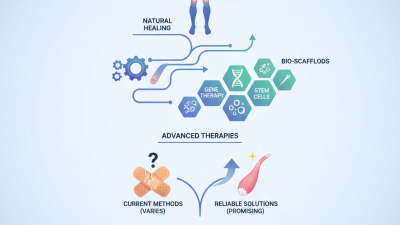
Collagen scaffold technology has emerged as a groundbreaking solution in tissue engineering and regenerative medicine. This innovative approach utilizes collagen, a natural protein found in the body, to create a supportive framework for cell growth and tissue repair. Its application spans various fields, from orthopedics to aesthetic medicine. The adaptability and biocompatibility of collagen make it an ideal choice for scaffolding.
The benefits of collagen scaffold technology are vast and impactful. It promotes cellular adhesion and proliferation, facilitating the regeneration of damaged tissues. This technology also reduces the risk of rejection, as collagens are derived from natural sources, making it safer for patients. Challenges still exist, such as controlling the scaffold’s degradation rate and ensuring a uniform structure. As researchers continue to refine these methods, the future of collagen scaffold technology looks promising.
Harnessing the potential of collagen scaffold technology may revolutionize how we approach healing and regeneration. It holds great promise but requires a careful examination of its limitations and potential improvements. This ongoing research is critical for maximizing its effectiveness and reliability in real-world applications.
Collagen scaffold technology is an innovative method often used in tissue engineering. It involves creating a framework infused with collagen, a key protein found in the body. This framework supports cell growth and tissue regeneration, making it crucial for healing processes. Researchers utilize this technology to enhance recovery after injuries or surgeries. The natural properties of collagen promote biocompatibility, which means the body accepts the scaffold without significant rejection.
The benefits are diverse and impactful. For instance, collagen scaffolds can mimic natural tissue structures. This mimicry helps cells adhere and flourish, ultimately leading to better healing outcomes. The flexibility of collagen allows it to be crafted into various shapes and sizes, tailored to specific needs. However, it's important to recognize that the effectiveness can vary. Some processes may require fine-tuning to achieve optimal results. Ongoing research continues to explore these nuances, highlighting both potential and challenges in this promising field.

Collagen scaffolds are pivotal in tissue engineering, playing a crucial role in regenerative medicine. These scaffolds provide a natural matrix for cell attachment and growth. They support the organization of tissues by facilitating nutrient exchange and waste removal. Collagen types I, II, and III are the most prevalent in these applications due to their structural properties.
Type I collagen is commonly used for skin and bone tissue engineering. It is abundant in the human body and promotes cell proliferation effectively. Type II collagen, primarily found in cartilage, is crucial for joint repair. Researchers have indicated that scaffolds made from type II collagen can lead to improved cartilage regeneration. Additionally, type III collagen, often found in vascular tissues, is ideal for guiding blood vessel formation.
Despite the numerous advantages, challenges remain. The degradation rate of collagen scaffolds can vary, affecting long-term tissue integration. Some studies suggest that optimized cross-linking and blending with synthetic materials can enhance durability. Monitoring the mechanical properties is vital since insufficient strength may lead to scaffold failure. The selection of the appropriate collagen type is not only a matter of functionality but also a balance between biocompatibility and structural resilience.
This chart illustrates the different types of collagen scaffolds used in tissue engineering and their respective applications. The data represents the percentage of use in various areas of research and development.
Collagen scaffold technology is reshaping regenerative medicine. It uses collagen as a structural framework for cell growth. This technology supports tissue formation and repair in various medical fields, notably orthopedics, cardiology, and wound healing.
A recent report by the Global Regenerative Medicine Market states that collagen scaffolds facilitate cell adhesion and proliferation effectively. Studies show these scaffolds can enhance healing rates by up to 50% compared to traditional methods. Their biocompatibility allows for better integration with host tissues. Furthermore, their porous nature promotes vascularization, critical for long-term success in tissue engineering.
Building a collagen scaffold requires precision. While multiple fabrication techniques exist, not all yield optimal results. Researchers must consider pore size, density, and mechanics. These factors directly influence tissue integration and functionality. In regenerative applications, a single error can hinder the healing process or lead to complications. It's essential to analyze and adjust methodologies continually to improve outcomes.
Choosing the right scaffold material is vital. Collagen offers many benefits but may not suit every application. Regular evaluations can help tailor solutions more effectively, ensuring patient safety and recovery.
Collagen scaffold technology has emerged as a significant innovation in clinical practices. These scaffolds serve as a structural framework to support tissue regeneration. They are primarily composed of collagen, a protein that is integral to skin, bones, and connective tissue. Their biomimetic properties align closely with the natural tissue, facilitating cell adhesion and growth.
In clinical settings, collagen scaffolds find diverse applications, particularly in wound healing and reconstructive surgery. They encourage new tissue formation by providing a conducive environment. For instance, in dermal wound care, these scaffolds can accelerate healing by maintaining moisture and promoting cell migration. Surgeons utilize them in cartilage repair, providing a foundation for new cartilage cells to regenerate.
Despite the advantages, there are challenges. Not all scaffolds integrate well with host tissue. Some may provoke immune responses. Ongoing research aims to enhance their efficacy and biocompatibility. The field is dynamic, exposing gaps that require further exploration to maximize the benefits of collagen scaffolds in medical applications.
Collagen scaffold technology represents a significant advancement in regenerative medicine. This innovative approach utilizes collagen structures to support cell growth and tissue repair. In recent years, researchers have focused on enhancing the properties of these scaffolds. The aim is to create materials that mimic the natural extracellular matrix more closely. This biomimicry is crucial for effective tissue engineering.
Future trends in collagen scaffold development include the incorporation of bioactive factors. These factors can promote cell proliferation and differentiation. Moreover, 3D bioprinting offers exciting possibilities for customizing scaffold design. This technology allows for precise control over scaffold architecture, which can lead to improved integration with host tissues. Environmentally friendly production methods are also gaining traction, which is vital for sustainable practices in biomedical applications.
Despite these advancements, challenges persist. Variability in collagen sources can affect consistency. Researchers are exploring synthetic alternatives to mitigate this issue. Continuous innovation is necessary to address these limitations. The potential for collagen scaffolds to transform medical treatments remains high. However, more work is needed to fully realize their capabilities in clinical applications.
We use cookies to show you content that is relevant to you. By clicking “Accept”, you agree to the storing of cookies on your device to enhance site navigation, analyze site usage, and assist in our marketing efforts. Feel free to read more about cookies by clicking "settings"