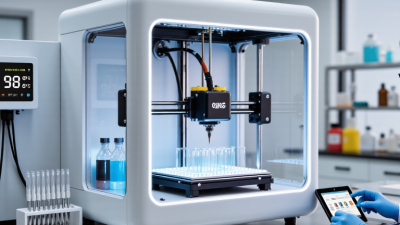
Choosing a bioink development platform in 2026 is not merely an equipment decision. It shapes how quickly a laboratory can turn a promising formulation into a repeatable, cell-compatible construct. Market figures show momentum, but they need careful reading. MarketsandMarkets estimated the global 3D bioprinting market at $1.3 billion in 2022 and projected $3.3 billion by 2027, a 20.4% compound annual growth rate. That estimate covers the broader bioprinting market, not bioink development platforms alone. An important distinction.
A useful expert perspective comes from Harvard bioengineer Jennifer Lewis, whose research on printable living materials highlights the balance between printability and biological function. In paraphrase, her work points to a practical test: an ink must pass through a nozzle, retain its shape, and support living cells. Those demands become concrete at the bench: a narrow nozzle, a temperature-sensitive gel, and cells exposed to shear stress. A platform should be assessed by its material compatibility, dispensing control, workflow, characterization tools, and reproducibility—not by a polished demonstration.
That sounds tidy. Real laboratories are messier. One formulation may print cleanly yet perform poorly in culture; another may support cells but slump before crosslinking. The right platform depends on the intended tissue model, available expertise, and validation needs. This guide compares the capabilities that matter, the trade-offs teams often miss, and the questions worth asking before purchase. It also treats vendor claims as starting points, not proof. Readers should verify performance with their own bioinks and protocols.
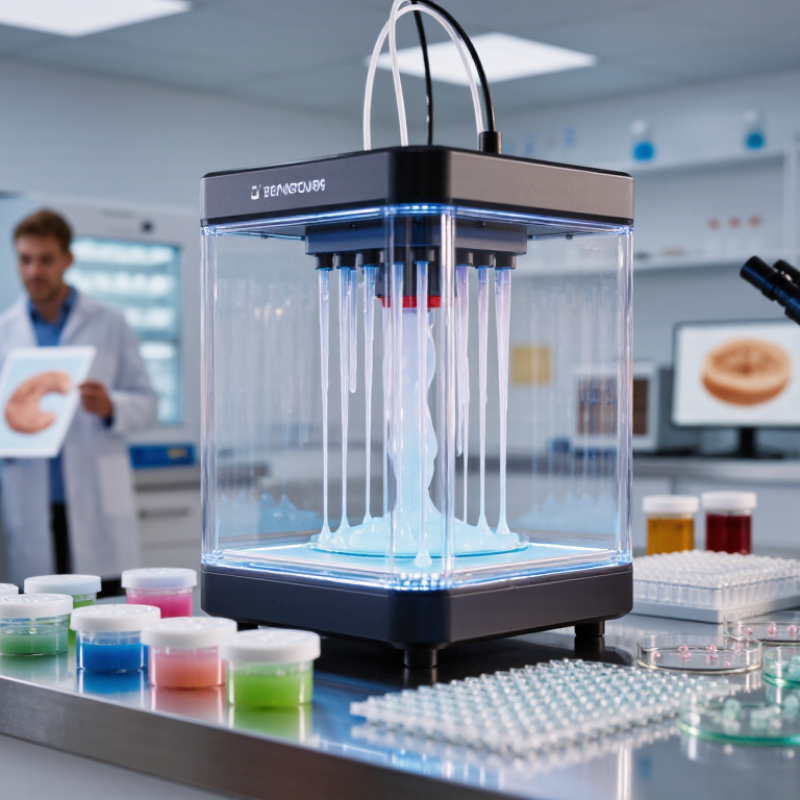
A platform is only useful when it fits the intended tissue and workflow. Define the target structure, printing method, and required handling conditions first. A cartilage model may need a different balance of shape retention and cell-friendly gelation than a soft tissue construct. Write down measurable needs, such as nozzle size, printing temperature, and acceptable cell viability after printing. Small details matter.
Name the cell type and its source before testing materials. Primary cells, stem-cell-derived populations, and established cell lines can respond differently to shear, temperature, and crosslinking. Ask how viability and function will be measured, and set controls before comparing results. Also map the likely regulatory pathway with qualified regulatory and clinical experts. Requirements depend on intended use and jurisdiction. This step is easy to underestimate; postponing it can lead to avoidable redesign.
Tips: Bring a one-page specification to platform evaluations. Include application, cell type, sterility needs, print format, and regulatory questions. Request representative data, not only ideal demonstrations, and check whether methods are reproducible across operators. Be candid about uncertainty. Early assumptions may be wrong, and that is worth finding out.
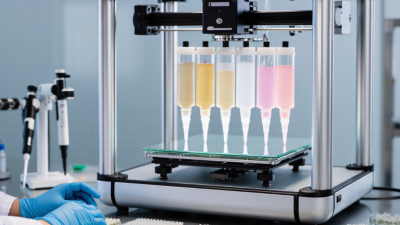
How to Choose a Bioink Development Platform in 2026?
Match printing technology to the bioink, not the other way around. Pressure-driven extrusion can handle thicker, cell-rich formulations, but narrow nozzles and high pressure may stress cells. Watch the filament as it leaves the nozzle. Does it hold its shape, or slump across the next layer? That small detail can reveal more than a glossy demonstration.
Droplet-based systems suit lower-viscosity inks and can place small volumes precisely. They may struggle with dense cell suspensions or formulations that clog the nozzle. Crosslinking matters just as much. Ionic gels can set quickly after deposition, while light-triggered chemistries require attention to exposure time and cell sensitivity. Test the actual combination of ink, nozzle, and curing method. Not a substitute mixture.
Compare viscosity across relevant shear conditions, filament recovery, print pressure, and cell viability after printing. A tidy lattice is not enough. Cells may respond poorly even when the shape looks perfect. The trade-off is real. I would also question any platform comparison that reports resolution but omits curing conditions or post-print cell measurements. Those missing details can change the result. A modest pilot print with your own formulation often exposes practical limits early, though one test rarely settles the question.
Choosing a bioink development platform in 2026 requires more than checking its production capacity. Ask how mixing conditions change at larger volumes. Shear, temperature, and hold times can affect viscosity and print performance. Request data from repeated batches, not a single successful run. Small differences matter. A platform should also support clear batch records and traceability from raw materials to finished samples.
Tips: Map each scale-up step before a pilot run. Check whether sterility controls suit the specific formulation and process. Review equipment cleaning, environmental monitoring, and contamination-response procedures. For ISO 13485:2016 readiness, look for controlled documents, training records, change controls, and a defined path for handling deviations. Readiness is not the same as certification.
Ask how the quality system works in daily practice, not only during an audit. Can staff retrieve a batch history quickly? Are calibration and maintenance records current? Can process changes be assessed and documented consistently? A polished dashboard may hide gaps in routine records. No platform removes every risk, and some details may only become clear during a pilot. That uncertainty deserves attention before scale-up commitments.
| Assessment Dimension | Open Benchtop Platform | Closed Single-Use Batch Platform | Automated Modular Pilot Platform | Integrated Production-Oriented Suite |
|---|---|---|---|---|
| Typical development stage | Early formulation screening and small-scale process development. | Reproducible laboratory batches and process-transfer studies. | Scale-up trials, process characterization, and engineering runs. | Controlled manufacturing development and established production processes. |
| Scale-up approach | Usually relies on repeated small batches; vessel geometry and manual handling may change at larger scale. | Scale-up may use larger compatible single-use assemblies, subject to mixing, heat-transfer, and material limits. | Designed to support staged increases in batch size or parallel processing; confirm that critical process conditions remain comparable. | Can support defined production-scale operations, but capacity and scale-up performance must be demonstrated for the specific formulation and process. |
| Process repeatability | Operator technique can have a substantial effect; written procedures and controlled inputs help reduce variation. | Preconfigured assemblies can reduce some setup variability; supplier specifications and lot controls should be reviewed. | Recipe control, instrument monitoring, and recorded process parameters can improve repeatability when properly configured. | Typically requires formal process controls, qualified equipment, and documented operating ranges appropriate to intended use. |
| Sterility strategy | Often uses separately sterilized components and aseptic handling; open transfers increase exposure to the environment. | Closed fluid paths can reduce opportunities for contamination during processing; single-use parts do not by themselves guarantee a sterile process. | May combine closed assemblies with controlled connections and environmental controls; verify the full process boundary. | Requires a documented contamination-control strategy, including appropriate material controls, environmental measures, and process-specific evidence. |
| Sterilization compatibility | Check compatibility of each wetted material and any sterilization method used; repeated treatment may affect material properties. | Review the supplied sterility status, sterilization method, packaging, and compatibility of all product-contact components. | Confirm that tubing, connectors, sensors, and reusable equipment are compatible with the selected cleaning or sterilization approach. | Requires documented, validated procedures where applicable, with defined acceptance criteria and change control. |
| Traceability and data capture | May depend on manual batch records and separate instrument logs. | Can support component and batch identification; electronic records vary by system configuration. | May provide recipe history, sensor records, alarms, and user access controls; assess data integrity and record-review capabilities. | Should support controlled records, equipment and material traceability, review, retention, and applicable data-integrity controls. |
| ISO 13485:2016 readiness | Equipment alone does not establish conformity. Readiness depends on the organization’s quality system, documented procedures, and controlled records. | Request evidence supporting supplier qualification, component traceability, change notification, and documentation needed for the user’s quality system. | Assess requirements management, software and equipment validation support, audit trails where applicable, and controlled process documentation. | May be better suited to a controlled manufacturing workflow, but the platform itself is not proof of ISO 13485:2016 certification or compliance. |
| Key evidence to request | Operating procedures, material specifications, calibration information, and a plan for recording batch parameters. | Assembly drawings, material and sterility documentation, lot traceability, and change-control information. | Scale-up data, process-capability evidence, software documentation, calibration records, and validation support. | Validation documentation, quality agreements where applicable, traceability records, and evidence relevant to the intended manufacturing process. |
| Best fit when | Flexibility and low-complexity experimentation are the priority. | Closed handling and consistent batch setup are priorities at laboratory scale. | Process transfer, automation, and structured scale-up are central requirements. | Production controls and quality-system integration are major selection criteria. |
Evaluation note: These are general platform archetypes, not guarantees of performance or regulatory status. Confirm capacity, sterility controls, material compatibility, validation needs, and quality documentation for the specific bioink process. ISO 13485:2016 applies to an organization’s quality management system; equipment selection alone does not establish certification or conformity.
A bioink platform should help teams connect material choices with the construct’s intended use. Under ISO 10993-1:2018, biological evaluation is part of a risk-management process, not a universal checklist. Define where the construct contacts the body, the contact type, and its expected duration. A temporary skin-facing model and an implantable tissue construct do not raise the same questions.
Look beyond the base polymer. Cells, crosslinkers, photoinitiators, degradation products, and sterilization can all affect the biological profile. Ask whether the platform supports evaluation of the processed construct, not just an unprocessed ink sample. Keep batch records and document processing conditions, such as light exposure or washing steps. Small changes matter. They may alter what remains in the final material.
Choose a platform that makes sample preparation repeatable and supports a reasoned testing plan. The right evaluations depend on the intended use, exposure, and available evidence; not every test applies to every construct. Discuss uncertainties with qualified biological-safety specialists, and record why each assessment is relevant. Some results may be difficult to interpret when living cells and degradable materials interact. That is worth acknowledging, rather than treating a standard protocol as a complete answer.
A useful bioink development platform should make formulation changes traceable and printing conditions repeatable. In 2026, compare systems by temperature control, dispensing consistency, and how easily they record nozzle size, pressure, and print speed. These details matter because a small pressure shift can alter filament shape and cell stress. Treat ≥80% post-print viability as a screening benchmark, not a universal pass mark. Cell type, assay timing, and handling can all change the result.
Measure viability at a defined interval after printing, using the same staining method and imaging settings across runs. Include an unprinted cell control and, when feasible, a printed reference formulation. Record the number of replicates and report variation, not only the average. An 82% result from one run may look reassuring, but it does not establish consistency. A visually neat lattice can still contain damaged cells. Results below the benchmark are useful, too: they can point toward excessive shear, poor temperature control, or unsuitable crosslinking conditions.
Tips: Keep a run log beside the printer. Note nozzle changes, pauses, and room conditions. Repeat borderline results before changing several variables at once. It is tempting to blame the bioink immediately; sometimes the setup is the less obvious problem.
Validate Runs Using ≥80% Post-Print Viability as a Screening Benchmark
Use 80% viability as a screening threshold when comparing bioink development workflows. Measure viability at a consistent post-print time point and under matched assay conditions; treat this benchmark as a screening guide, not a universal acceptance standard.
We use cookies to show you content that is relevant to you. By clicking “Accept”, you agree to the storing of cookies on your device to enhance site navigation, analyze site usage, and assist in our marketing efforts. Feel free to read more about cookies by clicking "settings"