What Are the Best Collagen Based Bioinks for 3D Printing?

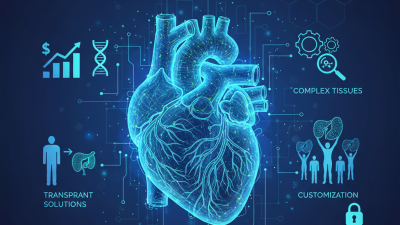
Collagen based bioinks are gaining significant attention in the field of 3D printing. They provide excellent biocompatibility and mimic the natural extracellular matrix. This allows for the development of complex tissue structures for medical applications.

Despite their benefits, selecting the right collagen based bioinks can be challenging. Factors like viscosity, crosslinking methods, and cell compatibility must be considered. Researchers often face limitations regarding mechanical properties and printability. Understanding these parameters is crucial for advancing bioprinting technologies.

Current studies highlight various collagen based bioinks, each with unique advantages. Some excel in creating soft tissues, while others focus on load-bearing structures. As the technology evolves, we must critically evaluate each bioink's performance. The quest for the best options continues, revealing both the potential and the hurdles faced in tissue engineering.
What Are the Best Collagen Based Bioinks for 3D Printing?

Overview of Collagen-Based Bioinks for 3D Printing

Collagen-based bioinks are gaining attention in the field of 3D printing. These materials provide a promising option for tissue engineering applications. Collagen, a natural protein, plays a crucial role in maintaining tissue structure. Its biocompatibility makes it an ideal candidate for bioinks. A report by Research and Markets estimates the global market for collagen-based biomaterials will reach $5.8 billion by 2025.

A variety of collagen bioinks exist. Some are derived from bovine or porcine sources. Others are synthetically produced. Each type offers unique properties that affect printability and cell interaction. For instance, natural collagen solutions often present difficulties in achieving precise printing resolutions. Striking a balance between viscosity and mechanical strength poses a challenge. Many researchers are exploring crosslinking methods to enhance stability in printed structures.

There is a growing demand for more effective collagen bioinks. A recent survey highlighted that nearly 40% of researchers face limitations in print quality and speed with current materials. Enhancements in bioink formulations are essential for improving tissue viability and functionality post-printing. Collaborative efforts between material scientists and biomedical engineers are crucial to overcoming these challenges.
Key Properties of Collagen in Bioinks

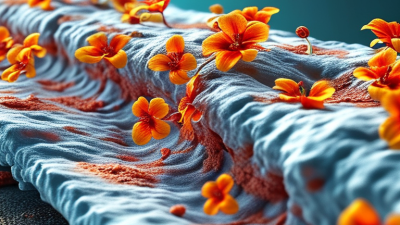
Collagen in bioinks offers unique properties that make it a popular choice for 3D printing. As a natural protein, collagen has a crucial role in tissue structure and function. Its biocompatibility promotes cell attachment and proliferation. This characteristic is vital for creating functional tissues in regenerative medicine.

Collagen bioinks are hydrophilic, providing an excellent environment for hydration and nutrient diffusion. This feature helps maintain cellular health and activity. Additionally, collagen’s ability to mimic the extracellular matrix enhances cellular behavior during printing. However, achieving optimal viscosity for 3D printing can be challenging.

It is essential to consider the source of collagen. Different sources may vary in purity and biological activity. Ensure that it meets your research needs. Always evaluate the physical properties of collagen-based bioinks across different concentrations. Finding the right balance can optimize printing quality and structural integrity. Staying informed on evolving techniques in bioink development will provide valuable insights.

What Are the Best Collagen Based Bioinks for 3D Printing? - Key Properties of Collagen in Bioinks

Property Description Importance in Bioinks
Viscosity The measure of a fluid's resistance to flow. Affects printability and resolution of 3D structures.
Gelation Temperature The temperature at which collagen solutions form a gel. Critical for handling and processing during printing.
Biocompatibility The ability to be compatible with living tissues. Essential for tissue engineering applications.
Cell Adhesion The capacity of cells to adhere to the extracellular matrix. Influences cell survival and proliferation in printed constructs.
Mechanical Strength The ability to withstand forces without failure. Affects the durability of the printed structure.
Degradability The rate at which the bioink breaks down in the body. Important for applications involving temporary scaffolding.

Types of Collagen Used in Bioink Formulations

Collagen is a key component in bioinks for 3D printing, especially in tissue engineering. Different types of collagen are utilized to achieve desired properties in bioink formulations. Type I collagen is the most abundant and widely used. It provides excellent mechanical strength and promotes cell attachment. Recent studies indicate that it enhances cellular functions and tissue formation.

Type II collagen is significant for cartilage applications. Its unique properties make it suitable for cartilage tissue engineering. Some researchers emphasize the challenge of sourcing animal-derived collagen. This could lead to variability in quality. On the other hand, recombinant collagen offers a more consistent product. It eliminates ethical concerns but may lack some natural properties.

When formulating bioinks, consider the collagen type that aligns with your application. The right choice can make a difference in biocompatibility and overall performance. Pay attention to the concentration of collagen in the bioink, as it affects the viscosity and printability. Be mindful of the source of collagen. Understanding these factors can increase the effectiveness of your 3D printing projects.

Advantages of Collagen Bioinks in Tissue Engineering

Collagen bioinks have emerged as a promising innovation in tissue engineering. They bring several advantages, particularly in biocompatibility and structural integrity. Collagen, a natural protein, closely mimics the extracellular matrix found in living organisms. This similarity enhances cell adhesion and promotes growth, which is crucial for tissue regeneration.

Moreover, collagen bioinks are versatile in their applications. They can be tailored for different tissue types, from skin to cartilage. Their ability to support diverse cell types makes them suitable for various medical applications. However, the process of 3D printing with collagen bioinks is not without challenges. Maintaining the bioink's mechanical properties during printing can be difficult. Temperature and pH fluctuations can also affect print quality.

These factors require careful consideration during the formulation and printing processes. While the potential is vast, research into optimizing these bioinks is ongoing. Understanding the limitations and exploring new methods will be essential for future advancements in the field. Finding the right balance between printability and biological functionality remains a key focus for researchers.

Current Research and Future Trends in Collagen Bioinks

Recent advances in 3D printing technology have highlighted collagen-based bioinks as vital materials for soft tissue engineering. Collagen, a natural protein, mimics the extracellular matrix, promoting cell attachment and growth. Current research focuses on refining the properties of these bioinks. Adjusting factors like concentration and crosslinking methods can significantly influence their performance. Scientists are also exploring blends with other biomaterials to enhance mechanical strength or bioactivity.

Future trends suggest a growing interest in functionalizing collagen bioinks. This involves integrating growth factors or peptides to stimulate specific cellular responses. Researchers are aiming for more personalized medicine applications, where bioinks can be tailored to individual patient needs. However, challenges remain, particularly in standardizing processing techniques and ensuring reproducibility. As we learn more about the complex interactions between cells and bioinks, developing reliable protocols will be essential for advancing the field.