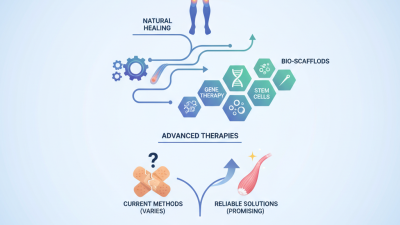
Choosing a soft tissue regeneration product can feel like comparing identical white boxes. Their labels may promise faster healing, stronger tissue, and better comfort. Real performance is less simple.
Professor Ali Khademhosseini, a leading regenerative medicine researcher, has said, “The future of medicine is regenerative medicine.” His point matters here. Regeneration depends on biology, product design, and clinical judgment. A hydrogel, collagen matrix, or advanced dressing may support healing, but none works equally well for every wound or patient.
This guide explores seven practical tips for making a safer, evidence-informed decision. It considers the product’s intended use, material composition, clinical evidence, sterility, storage requirements, and professional oversight. Look closely at the instructions. A product requiring refrigeration may be unsuitable for a small clinic with unstable cold storage. A product designed for shallow wounds may not fit deeper tissue damage. Small details can change outcomes.
Ask who produced the evidence. Was it a controlled clinical study, a laboratory experiment, or a marketing claim? That difference is important. Speak with a qualified healthcare professional before purchasing or applying any product. They can assess wound depth, infection risk, allergies, circulation, and treatment goals.
Not every impressive product is the right product. I have seen how attractive packaging can distract from weak evidence. That is an uncomfortable but useful reminder. Careful comparison remains essential. Good decisions combine credible science, transparent labeling, practical experience, and realistic expectations.
Understanding soft tissue regeneration products starts with their intended application. Some products provide a temporary scaffold, while others support clot stability and tissue coverage. They may be used in wound care, periodontal procedures, or reconstructive surgery. The same material may not suit every anatomical site. Ask seven practical questions: What tissue is involved? What healing goal is expected? What evidence supports the use? How is it handled? How is it stored? Who should avoid it? Can its source be traced?
Evidence matters. Look for peer-reviewed studies, transparent safety information, and clear instructions from qualified professionals. Laboratory results can look impressive, yet they may not predict every clinical outcome. A small study is not useless, but it deserves careful reading. Check the patient population, follow-up period, and reported complications. Also, confirm whether the product is authorized for its intended use in the relevant region.
Handling details can affect performance. Some materials require controlled temperature, sterile instruments, or hydration before placement. A damaged package or unclear expiration date should stop the procedure. Patient factors also matter, including smoking, infection, medication use, and poor circulation. A clinician should assess these risks before purchase or treatment. Cost alone is a weak guide. A cheaper option may require more preparation or follow-up care. I would also record the product’s lot number and storage history. These details seem minor until a healing result becomes difficult to explain. Even experienced teams can overlook them. Recheck the instructions.
| Buying Tip | Product Category | Typical Material or Structure | Common Applications | Key Selection Factors | Important Limitations |
|---|---|---|---|---|---|
| 1. Match the product to the clinical objective | Collagen-based matrices | Purified collagen derived from animal tissue or recombinant sources; supplied as sheets, membranes, sponges, or gels | Guided tissue regeneration, wound coverage, soft-tissue augmentation, and support of cell ingrowth | Porosity, thickness, handling properties, resorption profile, source material, and clinical indication | May provide limited mechanical strength; performance can vary with processing, defect size, and wound conditions |
| 2. Check whether the scaffold is biologically appropriate | Acellular dermal matrices | Decellularized dermal extracellular matrix with structural collagen and elastin components | Soft-tissue reinforcement, wound management, reconstructive procedures, and tissue-volume support | Human or animal origin, decellularization and sterilization methods, thickness, fixation requirements, and intended use | Not suitable for every patient or anatomical site; incorporation depends on vascularity, infection control, and surgical technique |
| 3. Compare resorption and persistence | Synthetic biodegradable scaffolds | Biodegradable polymers such as polylactic acid, polyglycolic acid, polycaprolactone, or related copolymers | Temporary tissue support, wound healing research, soft-tissue repair, and controlled tissue-engineering applications | Degradation time, by-products, mechanical strength, porosity, flexibility, and compatibility with the target tissue | Degradation may produce local changes in acidity or inflammation; clinical evidence differs by material and indication |
| 4. Evaluate structural strength and handling | Reinforcement meshes and composite scaffolds | Permanent or absorbable polymer meshes, biologic matrices, or layered composite constructions | Hernia repair, pelvic soft-tissue support, reconstructive surgery, and reinforcement of weakened tissue | Tensile strength, pore size, flexibility, fixation method, tissue integration, and risk of contraction | Potential complications include infection, adhesions, seroma, chronic pain, mesh contraction, or inadequate integration |
| 5. Confirm the intended delivery method | Injectable hydrogels and soft-tissue fillers | Hyaluronic acid, collagen, calcium-based materials, or other gel-forming substances approved for specific uses | Soft-tissue volume correction, contour restoration, wound-care research, and localized delivery applications | Injection depth, viscosity, duration, reversibility, sterility, anatomical suitability, and practitioner training | Results may be temporary; risks include swelling, infection, vascular injury, nodules, migration, or inflammatory reactions |
| 6. Review evidence, safety, and regulatory status | Growth-factor or cell-supporting products | Scaffolds designed to support endogenous cells, or products combined with biologic signaling components where legally permitted | Research and selected regenerative procedures subject to local authorization and clinical protocols | Peer-reviewed evidence, approved indication, sterility testing, immunogenicity data, manufacturing controls, and post-market surveillance | Marketing claims may exceed available evidence; regulatory requirements differ substantially between countries and product classes |
| 7. Verify storage, traceability, and total cost | All soft-tissue regeneration products | Sterile, single-use membranes, matrices, meshes, gels, or scaffold systems supplied with lot-specific documentation | Clinical treatment, surgical reconstruction, wound care, and laboratory or translational research | Expiry date, storage temperature, packaging integrity, lot traceability, training requirements, compatibility with instruments, and disposal costs | Incorrect storage or damaged packaging can compromise sterility and performance; purchase price may not include preparation, fixation, or follow-up costs |
Selection should be based on the patient’s condition, tissue type, defect characteristics, clinical evidence, approved indications, and the judgment of a qualified healthcare professional.