China is becoming a significant source of human collagen alternatives for skincare, medical materials, nutrition, and tissue engineering. Its market includes recombinant human-like collagen, marine collagen peptides, microbial fermentation products, and plant-based collagen-support ingredients. These categories sound similar. They are not interchangeable.
Professor Jianjun Cheng, a biomaterials researcher, has said, “Collagen is a very complicated protein.” That short observation matters. Molecular structure, amino-acid sequence, purity, molecular weight, and production method can change performance. A recombinant product may imitate selected human collagen sequences. Marine collagen may offer useful peptides, but it is not human collagen. Plant ingredients generally support collagen production rather than replace collagen itself.
This guide examines China’s leading options through a practical and evidence-focused lens. It considers source transparency, fermentation technology, peptide characterization, safety documentation, clinical evidence, and manufacturing consistency. Product certificates alone are not enough. Real quality requires traceable raw materials, controlled processing, and credible testing.
Some claims remain stronger than the evidence. That deserves attention. A polished package cannot prove biological equivalence. Nor can a low price prove poor quality. Buyers should ask for technical data, batch records, allergen information, and independent laboratory results. China’s strongest suppliers may provide detailed documentation, while smaller manufacturers may offer promising materials with limited public research.
The best human collagen alternatives depend on the intended use. A cosmetic serum needs different evidence from an injectable scaffold or oral supplement. This article compares those differences clearly, while recognizing an uncomfortable truth: no current alternative perfectly reproduces every function of native human collagen.
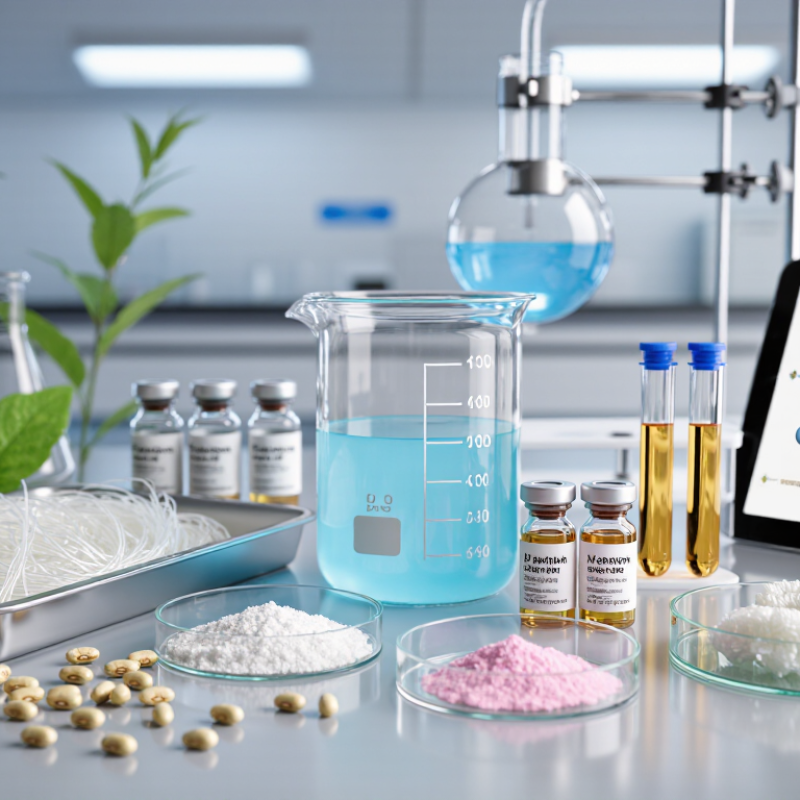
Human collagen alternatives are materials designed to support collagen-like functions without using collagen taken from people. In China, the most promising options include recombinant human-like collagen and carefully processed collagen peptides. Recombinant materials are made through controlled microbial fermentation. Their amino-acid sequences can resemble selected human collagen regions. This similarity may help them bind moisture or support skin-contact formulations. However, “human-like” does not mean identical to native human collagen.
Hydrolyzed marine, bovine, or porcine collagen works differently. Enzymes break collagen into smaller peptides, which are easier to dissolve and absorb. Some peptides may provide amino acids for tissue formation or act as signaling fragments.
Research shows possible benefits for skin hydration and elasticity. Results vary by dose, digestion, age, and product quality. The evidence is encouraging, but not perfect. Plant proteins can support collagen production indirectly through vitamin C, zinc, and amino acids. They cannot become human collagen directly.
Tips: Check the source, peptide size, testing methods, and complete ingredient list. Ask for batch testing and allergen information. For topical products, review irritation data and preservation systems. For oral products, consider heavy-metal testing and local regulatory compliance. China’s manufacturing capacity is strong, yet quality differs between suppliers. I would avoid dramatic “100% replacement” claims. They sound convenient, but biology is rarely that simple. A qualified dermatologist or nutrition professional can help match the alternative to your actual goal.
China produces several collagen alternatives, but the category is not perfectly defined. Recombinant human-like collagen uses engineered microorganisms to create collagen-mimicking proteins. It avoids direct human tissue sourcing. Animal-derived options include bovine and porcine collagen peptides, usually hydrolyzed for easier processing. Marine collagen, made from fish skin or scales, is also widely produced. It often offers smaller peptides and strong traceability potential.
Plant-based products are different. They contain vitamin C, amino acids, or botanical proteins that may support natural collagen formation. They are not collagen themselves. Industry reports show strong demand across these formats. MarketsandMarkets estimated the global collagen market at about USD 9.1 billion in 2022. It projects the market could reach USD 16.7 billion by 2028. Grand View Research also identifies beauty, nutrition, and medical applications as major growth areas. These figures describe collagen broadly, not every Chinese alternative.
Tips: Check the source species, peptide molecular-weight range, and hydroxyproline content. Ask for recent tests covering heavy metals, microbes, allergens, and contaminants. Manufacturing records should show batch traceability. Standards such as HACCP or ISO 22000 can support reliability, but certification alone proves little. I would also question dramatic “human-identical” claims without independent amino-acid and structural testing. Small differences matter. Suppliers should provide clear evidence, not polished wording.
Chinese collagen alternatives are increasingly made through microbial fermentation, rather than animal extraction. Selected genes encode collagen-like proteins, which microorganisms produce in controlled tanks. After fermentation, filtration, purification, and drying, manufacturers obtain recombinant humanized collagen or collagen-supporting peptides. The process resembles brewing, but cleanliness and traceability matter more.
Grand View Research valued the global collagen market at about USD 10.35 billion in 2023. It projects a 9.6% compound annual growth rate from 2024 to 2030. These figures explain China’s investment in fermentation capacity and analytical laboratories. In practice, a production batch should record strain identity, raw-material origin, fermentation temperature, purification steps, and microbial limits. Small details matter. A faint odor or cloudy solution can indicate processing problems.
Standardization remains uneven. Manufacturers commonly combine Chinese national requirements, cosmetic safety rules, ISO 22716 good manufacturing practices, and internal specifications. Tests may measure protein content, molecular-weight distribution, amino-acid composition, heavy metals, residual solvents, and microbial counts. The ISO 17516 cosmetics guideline is also widely used for microbiological quality control. However, “humanized” does not mean identical to collagen inside human tissue. It describes structural similarity, not guaranteed clinical performance. That distinction deserves clearer labeling. Reports from MarketsandMarkets identify recombinant collagen as a fast-growing category, but market estimates vary because definitions differ. Independent testing, batch certificates, and realistic claims remain essential. Fancy wording cannot replace evidence.
Chinese collagen alternatives are gaining attention, especially recombinant human-like collagen and fermentation-derived collagen peptides. Grand View Research valued the global collagen market at about USD 5.1 billion in 2023. Growth does not prove safety. It only shows demand.
Recombinant human-like collagen may reduce concerns linked to animal sourcing. Its amino-acid sequence can also support better biological compatibility. However, manufacturing quality matters greatly. Impurities, residual solvents, microbial contamination, and inconsistent molecular weight can change performance. China’s National Medical Products Administration requires cosmetic safety assessments and supporting efficacy evidence. Buyers should check testing for irritation, sensitization, heavy metals, and microorganisms. Look for batch-specific results, not broad marketing claims.
The effectiveness evidence remains uneven. A 2023 meta-analysis in Nutrients reviewed 26 randomized trials involving 1,721 participants. Oral collagen products showed improvements in skin hydration and elasticity, but study durations were often short. Most trials also used hydrolyzed animal collagen, not Chinese recombinant alternatives. That gap deserves attention. Small laboratory studies cannot replace controlled human trials. For topical products, collagen molecules are usually too large to penetrate deeply, so surface hydration may explain some visible results. In practical testing, a bland formula that causes no redness after several weeks may be more valuable than dramatic claims. Evidence is improving, but it is not complete.
Safety and effectiveness comparison of common collagen-source categories
How to read this chart: The effectiveness score reflects the relative strength of published human evidence for skin or joint outcomes. The safety score reflects general tolerability when appropriately processed and used, with 5 representing a more favorable profile. These are evidence-synthesis scores, not product ratings.
Marine, bovine, and porcine collagen peptides have the most established direct human evidence. Recombinant collagen is an emerging option with less independent clinical evidence, while plant-based products may support collagen synthesis but do not contain collagen peptides themselves. Individual allergies, source traceability, purification, and regulatory compliance remain important.
When choosing a Chinese collagen alternative, begin with traceability, not price. Trace the source. Ask whether it is recombinant humanized collagen, marine collagen, or bovine collagen. Each option has different allergen, purity, and absorption considerations. Request the production organism, raw-material records, molecular-weight profile, and batch-specific testing.
Grand View Research valued the global collagen market at USD 9.76 billion in 2022. It also projected a 9.6% compound annual growth rate through 2030. Fortune Business Insights estimated a smaller 2023 market base, showing how definitions can change results.
Market size does not prove clinical value. Look for published human studies, not laboratory claims alone. Check whether the study tested the same ingredient, dosage, and delivery method.
Test the batch. Require certificates for identity, microbiology, heavy metals, residual solvents, and endotoxins. Independent laboratories should verify these results.
ISO 10993-related testing can support biocompatibility discussions, but it does not replace product-specific evidence. China’s regulatory category also matters, especially for food, cosmetics, and medical applications.
A polished specification sheet can still hide gaps. I would compare three suppliers using identical questions and keep the original reports. No single score proves superiority.
Choose the material with consistent testing, transparent manufacturing, and evidence that matches your intended use. Be cautious with “100% human collagen” wording; it may describe sequence similarity, not collagen taken from people.
We use cookies to show you content that is relevant to you. By clicking “Accept”, you agree to the storing of cookies on your device to enhance site navigation, analyze site usage, and assist in our marketing efforts. Feel free to read more about cookies by clicking "settings"