What Are the Top Implantable Medical Materials in 2026?
In 2026, implantable medical materials are becoming more specialized, not simply stronger. Titanium alloys remain important for orthopedic plates, dental fixtures, and spinal components. Their strength, corrosion resistance, and established clinical history support continued use. Yet titanium can create imaging artifacts and may not suit every patient. That limitation deserves more attention.
PEEK offers a lighter, radiolucent option for selected spinal and orthopedic applications. Its elastic behavior can resemble bone more closely than some metals. However, surface integration remains a serious design challenge. Ceramic materials, including alumina and zirconia, provide excellent wear resistance for certain joint components. They can also fracture under unusual loading conditions. Small details matter.
This overview examines the leading implantable medical materials expected to influence clinical design in 2026. It considers titanium alloys, cobalt-chromium alloys, PEEK, advanced ceramics, nitinol, silicone, and bioresorbable polymers. Each section connects material properties with manufacturing methods, tissue response, durability, and practical clinical use. Expert evaluation must include laboratory evidence, long-term studies, and regulatory review. A promising result in a benchtop test does not guarantee patient success. Surgeons, biomedical engineers, and materials scientists may value different outcomes. Patients may prioritize comfort, imaging clarity, or revision risk. No material is universally best. The difficult question is not which material wins, but where each one performs reliably. Some 2026 predictions may prove wrong. That is why cautious comparison remains essential.
Definition and Role of Implantable Medical Materials
What Are the Top Implantable Medical Materials in 2026?
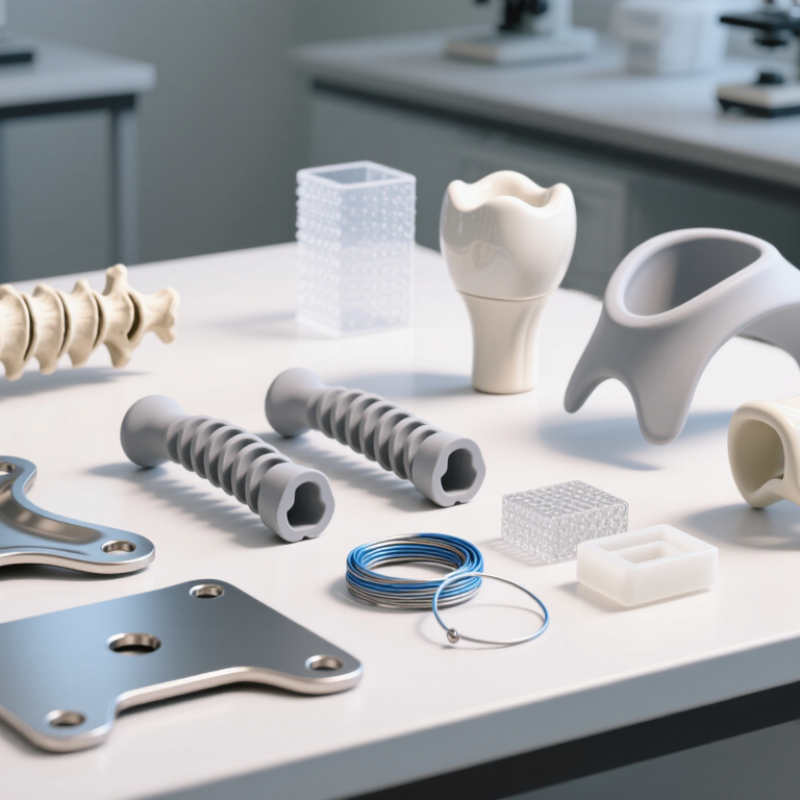
Implantable medical materials are engineered substances placed inside the body for therapy, support, or controlled treatment. They may remain for decades or dissolve after healing. Common categories include titanium alloys, cobalt-chromium alloys, ceramics, polymers, and composite materials. Each material must balance strength, tissue compatibility, corrosion resistance, and manufacturing precision.
In practice, titanium remains important for bone fixation because it is strong and supports bone integration. PEEK offers a lower stiffness profile and useful imaging performance in selected spinal applications. UHMWPE continues to serve as a bearing material, while advanced ceramics can reduce wear in specific joint designs. Nitinol is valued for shape memory and flexibility. No material is perfect. A strong surface may still cause wear, inflammation, or imaging limitations. Clinical results depend on design, surgical technique, sterilization, and patient biology.
Industry data shows continued demand. Grand View Research estimated the global biomaterials market at about USD 47.5 billion in 2023, with strong growth projected through 2030. MarketsandMarkets also reported expanding demand for medical polymers, driven by minimally invasive and implantable applications.
Tips: Evaluate the whole implant system, not one material alone. Check fatigue data, surface treatment, sterilization effects, and long-term clinical evidence. Ask whether laboratory performance reflects real patients. That step is often missed.
How Materials Are Selected for Different Implants
What Are the Top Implantable Medical Materials in 2026?
Material selection for an implant begins with anatomy, loading, and expected service life. No single material suits every body location. Titanium alloys remain valuable for bone fixation because they combine strength, low density, and useful bone integration. Ceramic materials offer excellent wear resistance in selected joint components, while medical-grade polymers can reduce friction and improve flexibility. Resorbable polymers may support temporary devices, but their breakdown rate must match tissue healing. That matching is not always predictable.
Engineers also examine corrosion, fatigue, sterilization, imaging compatibility, and manufacturing quality. A spinal device needs different mechanical behavior than a vascular scaffold. Patient history matters too. Diabetes, allergies, bone density, and infection risk can change the safest choice. Laboratory testing helps, but real clinical evidence remains essential. I have found that attractive early data can hide weaknesses, especially when testing conditions do not reflect years of movement inside the body. Material decisions should therefore involve surgeons, materials specialists, risk assessors, and patients.
Tips: Compare material performance with the implant’s exact purpose, not with general popularity. Check peer-reviewed evidence and validated testing methods. Ask how the material behaves after repeated loading, cleaning, and sterilization. Keep the design simple where possible. Complexity can create failure points. Reassess assumptions when clinical feedback conflicts with laboratory results.
Emerging Trends in Implantable Material Development
What Are the Top Implantable Medical Materials in 2026?
Implantable material development is moving beyond strength alone. Titanium alloys remain widely valued for bone fixation because they are strong, corrosion-resistant, and generally well tolerated. PEEK offers a lighter, radiolucent option for selected spinal and orthopedic devices. Advanced ceramics also attract attention, especially where low wear and smooth surfaces matter. Material choice still depends on anatomy, loading, imaging needs, and patient health.
Emerging research focuses on smarter surfaces rather than entirely new materials. Scientists are testing coatings that encourage bone attachment or reduce bacterial adhesion without releasing harmful substances. Resorbable magnesium alloys and biodegradable polymers may support temporary healing, then gradually disappear. Hydrogels and tissue-engineered scaffolds are being studied for controlled drug delivery and soft-tissue repair. However, promising laboratory results do not guarantee long-term clinical success. Some surface technologies still need stronger human evidence. That uncertainty deserves honest discussion.
Tips: Ask whether the material has relevant clinical evidence, not only impressive laboratory data. Review fatigue testing, wear particles, imaging compatibility, and expected degradation behavior. Surgeons and materials specialists should assess the device together. Keep records of allergies, previous implants, and healing problems. No material is perfect. Monitoring remains essential.