
Choosing a Red Light Therapy Spa for your business requires more than comparing lamp prices and glossy brochures. The decision affects client safety, treatment quality, staff training, and your long-term reputation. A professional spa should offer documented irradiance, wavelength ranges, treatment protocols, maintenance records, and transparent warranty terms. Ask how often devices are calibrated. Request evidence, not promises.
Dr. Michael Hamblin, a leading photobiomodulation researcher, describes the field as “the use of non-ionizing optical radiation to produce beneficial therapeutic effects.” His statement highlights an important point: light-based services need technical discipline. A reliable Red Light Therapy Spa should explain dosage, exposure time, eye protection, contraindications, and realistic outcomes without promising miracles. Staff should understand the equipment, not merely press a start button.
Look closely at the room. Is the device clean? Are protective glasses available? Can clients adjust comfortably without blocking ventilation? These details matter. So does the customer experience.
Do not ignore local licensing or insurance requirements. Confirm them independently.
A useful evaluation also includes a trial session, client feedback, and a written operating plan. Speak with current spa owners if possible. Their experience may reveal delays, weak support, or confusing software that sales teams overlook. I would not choose the cheapest system automatically. That can be a costly mistake. Still, premium pricing does not guarantee better performance. Compare measurable specifications, training quality, service response times, and clinical communication. Your final choice should feel evidence-informed, practical, and open to revision.
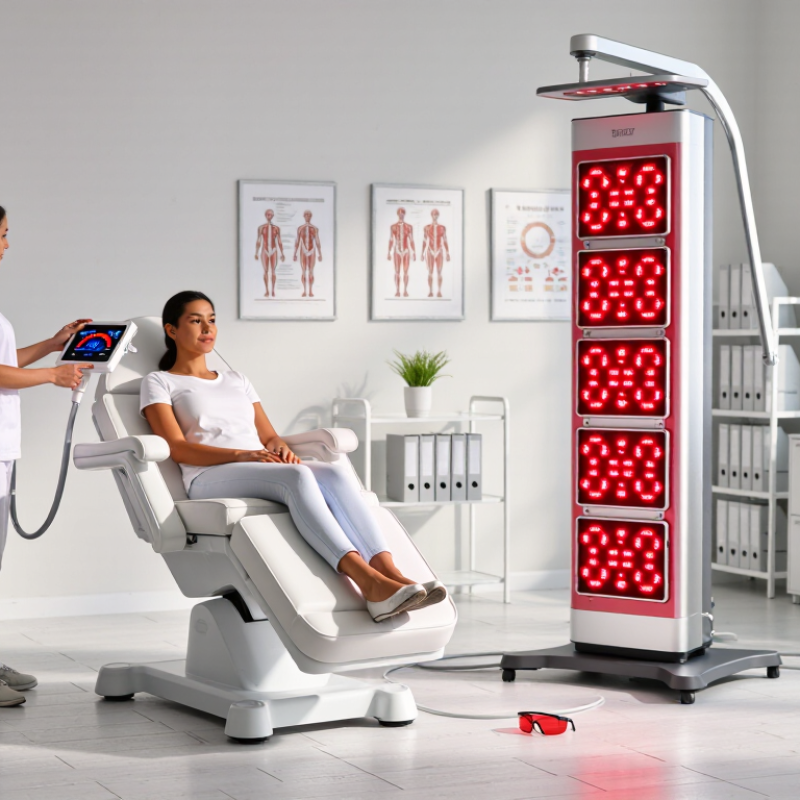
Before choosing equipment, define what your red light therapy spa must achieve. Is the goal to attract first-time wellness clients, increase repeat visits, or add value to existing treatments? The 2024 ISPA U.S. Spa Industry Study reported approximately $21.3 billion in spa revenue and 182 million visits in 2023. That scale suggests opportunity, but demand alone does not create a profitable service. Write one measurable target, such as 120 paid sessions monthly within six months.
Your goals should shape the room, schedule, and investment. A recovery-focused spa may need private treatment areas and evening appointments. A beauty-focused business may prioritize short sessions, clear skin-care protocols, and strong consultation procedures. Grand View Research estimates the global red light therapy market could grow at about 9.6% annually from 2024 to 2030. Treat this as market direction, not guaranteed income. A forecast is not a business plan.
Track session utilization, client retention, consultation time, and maintenance costs every month. Ask clients what they expected before treatment, then compare those answers with their feedback afterward. Be precise with claims. Red light therapy should not be presented as a cure, and staff should explain limitations and basic safety considerations. I would also test demand with a small pilot before purchasing multiple units. That may feel slower. It is often wiser. My first plan might be wrong, especially if local clients prefer shorter sessions or lower prices. Use real booking data to revise the concept.
| Business Goal | Key Metric | Planning Target | Spa Selection Requirement | Why It Matters | Priority |
|---|---|---|---|---|---|
| Launch a new service | Expected sessions per week | 25–50 sessions during the first 90 days | Flexible booking capacity, simple client onboarding, and a treatment area that fits the available floor space | Helps match the equipment capacity with realistic early demand | High |
| Build recurring revenue | Membership retention after 3 months | At least 60% of new members retained | Comfortable sessions, dependable operating performance, easy scheduling, and packages that support repeat visits | Repeat visits create more predictable monthly cash flow | High |
| Improve treatment-room utilization | Booked operating time | 50%–70% of available opening hours | Short setup and cleaning requirements, clear session controls, and sufficient daily duty-cycle capacity | Higher utilization spreads fixed costs across more paid sessions | Medium |
| Reach break-even quickly | Break-even sessions per month | Calculate using: fixed costs ÷ contribution margin per session | Transparent purchase or lease cost, low maintenance needs, and manageable electricity consumption | Shows whether expected demand can cover monthly operating costs | High |
| Offer a premium experience | Average revenue per visit | Set a price that supports a gross margin of 50% or more | Professional design, consistent light delivery, adjustable settings, privacy, and accessible controls | A stronger client experience can support premium pricing and referrals | Medium |
| Minimize operational risk | Unplanned downtime | Less than 2% of scheduled operating time | Documented safety features, warranty coverage, service access, user instructions, and electrical compliance | Downtime can cause cancellations, refunds, and lost customer trust | High |
| Support staff efficiency | Staff minutes per appointment | Keep non-treatment handling below 10 minutes | Intuitive controls, clear treatment protocols, easy disinfection, and minimal manual setup | Lower handling time allows staff to serve more clients without reducing service quality | Medium |
| Expand service capacity | Capacity added per expansion | Add one treatment position without major remodeling | Modular layout, scalable electrical planning, compact footprint, and compatibility with the existing booking workflow | Scalability reduces disruption when demand increases | Medium |
When choosing a red light therapy spa, inspect treatment quality before décor or membership pricing. The Global Wellness Institute’s 2024 Global Wellness Economy Monitor valued the wellness economy at $6.3 trillion in 2023. That growth attracts serious operators and careless ones.
Ask for measured wavelength, irradiance, and treatment time. A device should provide technical records, not vague claims such as “medical-grade.” Irradiance should be measured at the client’s treatment distance, because output can change across the panel. Confirm calibration dates and maintenance logs. Photobiological safety should also be assessed against IEC 62471. Do not accept a printed certificate without checking what it actually covers.
Dose matters.
A qualified operator should explain the intended outcome, session frequency, eye protection, and realistic limitations. A 2023 systematic review in Photodermatology, Photoimmunology & Photomedicine reported potential benefits for several skin-related applications, but results varied by wavelength, dose, and study design. Evidence is not a guarantee. I would be cautious when staff promise identical results for every client.
Treatment records improve accountability. The spa should document settings, skin responses, discomfort, and follow-up observations. Before-and-after photographs need consistent lighting and camera distance; otherwise, they can mislead. Ask whether staff receive documented training and whether clients are screened for photosensitivity, medications, and relevant medical conditions. A quick consultation is helpful, but it is not a diagnosis. Some spas may still rely too heavily on attractive equipment and weak outcome tracking. That deserves scrutiny.
Safety should guide every purchasing decision. Ask whether each device has recognized electrical and photobiological safety certifications for your operating region. Request current certificates, test reports, and maintenance records. A certificate is useful, but it is not proof of perfect operation. Devices can still be poorly maintained.
Check the treatment room carefully. Cables should be intact, surfaces easy to disinfect, and emergency controls clearly marked. Ask for measured light output, recommended exposure times, and eye-protection instructions. Staff should understand skin sensitivity, medication-related concerns, and when to delay treatment. They also need practical training, not just a printed manual. Ask how training is assessed and recorded. Short demonstrations help.
Tips: Watch a real staff session before signing a contract. Notice whether they explain risks calmly, check client history, and adjust sessions responsibly. Request written cleaning procedures and incident-reporting steps. Keep training logs and schedule refresher sessions. If staff cannot explain basic safety controls, pause the purchase. I once assumed a polished room reflected strong standards, but paperwork and daily habits revealed more. That assumption was wrong. Reliable spas welcome detailed questions and show evidence without hesitation.
Location should support repeat visits, not only passing traffic. Choose a site near offices, gyms, clinics, or residential buildings. Easy parking matters. The 2024 ISPA U.S. Spa Industry Study reported $21.3 billion in spa revenue and 192 million visits during 2023. That demand favors convenient, routine-based locations. Measure the floor carefully. Each treatment room needs privacy, safe cable routing, ventilation, and enough space for staff movement. A beautiful room can still underperform.
Tips: Draw the customer journey before signing a lease. Mark reception, waiting, treatment, storage, and cleaning areas. Leave space for growth. I would not trust a crowded floor plan, even when rent looks attractive.
Build a cost model around equipment, installation, rent, wages, insurance, cleaning, software, and marketing. Then calculate realistic daily capacity. If one session lasts 20 minutes, an eight-hour day allows 24 theoretical appointments per room. Breaks, cleaning, late arrivals, and maintenance reduce that number. Be conservative. The Global Wellness Institute valued the global wellness economy at $6.3 trillion in 2023 and projected it to reach $9 trillion by 2028. This growth is encouraging, but it does not guarantee local profitability. Compare three layouts and test staffing needs for busy and quiet periods. Service quality may fall when rooms are overbooked. Reliability matters more than impressive capacity.
How to Choose a Red Light Therapy Spa for Your Business?
Select a Spa Partner That Supports Business Growth
A spa partner should offer more than attractive equipment and polished sales materials. Look for practical experience in commercial wellness settings. Ask how many rooms similar businesses operate, how treatments are scheduled, and what happens during equipment downtime. Clear answers reveal operational knowledge.
Technical support matters every day. A trustworthy partner should explain light intensity, treatment distance, session timing, maintenance, and user safety in plain language. Request product testing records, staff training materials, warranty terms, and service response times. Independent safety documentation adds confidence. Avoid partners who promise dramatic results without credible evidence.
Growth needs measurable support. Choose a partner that helps you estimate treatment capacity, staffing needs, pricing, and repeat-visit potential. A simple monthly dashboard can track bookings, cancellations, equipment use, and customer feedback. Small details matter. Ask whether the partner will review these numbers with you after launch.
Do not ignore the uncomfortable questions. What if customers dislike the treatment experience? What if demand stays low? A responsible partner should discuss adjustments, not pressure you into expansion. I would also test the service personally, because a smooth sales meeting cannot replace the experience of sitting in the treatment room. Some decisions may remain imperfect, but transparent communication makes them easier to correct.
We use cookies to show you content that is relevant to you. By clicking “Accept”, you agree to the storing of cookies on your device to enhance site navigation, analyze site usage, and assist in our marketing efforts. Feel free to read more about cookies by clicking "settings"