Biocompatible materials science examines how materials interact with living tissues and bodily fluids. It connects materials engineering, biology, chemistry, and medical device design. A titanium implant, a soft silicone catheter, and a hydrogel dressing face very different conditions. Each material must suit its intended use, contact site, and exposure time. There is no single material that works safely in every body.
Researchers study more than whether cells survive brief contact. They may assess inflammation, tissue response, wear particles, chemical release, and changes during sterilization. Laboratory tests offer useful evidence, but they cannot fully reproduce a living body. That matters. A result for one device or test condition may not predict another. Material composition, surface finish, manufacturing residues, and patient health can all influence outcomes.
This field helps teams choose and evaluate materials for implants, wound care products, sensors, and other medical applications. It also asks a practical question: what happens after months or years of use? Some materials degrade as intended; others may change in unexpected ways. Those uncertainties deserve careful study, not confident shortcuts. Understanding biocompatible materials science means weighing test data, clinical evidence, and the limits of each.
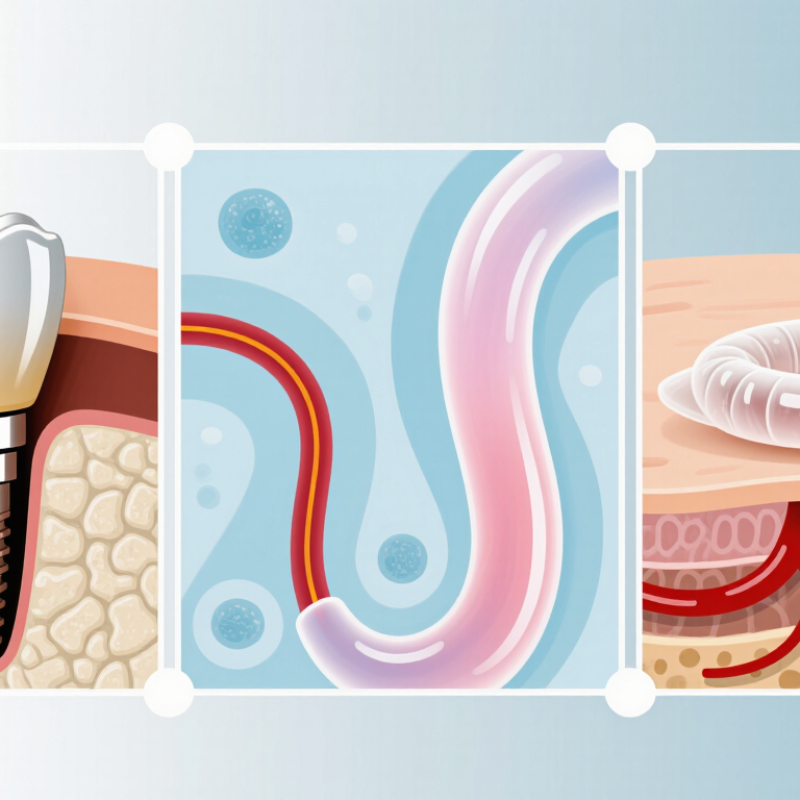
Biocompatible materials science studies how materials interact with the body and how to design those interactions safely. It brings together materials engineering, biology, and clinical knowledge. The goal is not simply to find a material that “does no harm.” A material must perform its intended task while limiting unwanted effects in a specific place and over a specific period.
Compatibility depends on context. A small implant may contact bone, blood, or soft tissue, and each setting brings different demands. Researchers examine properties such as surface texture, strength, wear, and degradation. They also consider how cleaning or sterilization may change a material. Lab tests can reveal useful clues, but they cannot reproduce every response in a living person. That gap deserves careful attention. No material is neutral.
Tips: When assessing a material, ask where it will be used, how long it will remain, and what could happen as it wears or breaks down. Look for evidence from relevant tests, not just a broad “biocompatible” label.

What Is Biocompatible Materials Science?
How Materials Interact with Living Systems
Biocompatibility is not simply a material being “safe.” It describes how a material behaves in a specific body location and for a specific period. A surface touching blood faces different demands from one fixed inside bone. Proteins may coat the surface within seconds, then influence how immune cells respond. Tiny changes in texture or chemistry can shift that response. That is not inertness. The body is active, and its reaction can change over time.
The U.S. Food and Drug Administration’s 2023 guidance on ISO 10993-1 recommends evaluating biological risks based on contact type and duration. Testing may examine irritation, toxicity, or other relevant effects; no single test proves universal compatibility. Real-world use also matters. A joint implant, for example, experiences repeated loading, fluid exposure, and wear. The World Health Organization’s 2022 Global Report on Assistive Technology estimates that 2.5 billion people need one or more assistive products, with demand potentially reaching 3.5 billion by 2050. That scale makes careful material selection consequential. Yet laboratory models cannot reproduce every patient’s biology. Researchers should treat promising results as evidence, not certainty, and keep asking what a test may have missed.
Examples of biomaterials, their interactions with the body, common uses, and relevant evaluation considerations
| Material class | Example material | Typical interaction with living systems | Common medical use | Important evaluation considerations |
|---|---|---|---|---|
| Metals | Titanium and titanium alloys | A stable surface oxide layer helps limit corrosion; the surface can support bone attachment in suitable implant designs. | Orthopedic and dental implants | Assess corrosion, wear, mechanical fatigue, surface condition, and local tissue response. |
| Metals | Stainless steel for medical devices | Generally forms a protective oxide surface; corrosion or release of metal ions can occur depending on the alloy and environment. | Surgical instruments and selected fixation devices | Consider corrosion resistance, nickel sensitivity where relevant, sterilization, and duration of contact. |
| Polymers | Medical-grade silicone elastomer | Often relatively flexible and chemically stable; tissue response depends on formulation, surface, and exposure conditions. | Catheters, tubing, and some soft-tissue devices | Evaluate extractables and leachables, irritation, sensitization, mechanical integrity, and sterilization effects. |
| Polymers | Ultra-high-molecular-weight polyethylene (UHMWPE) | Can provide a low-friction bearing surface; wear particles may provoke a local inflammatory response. | Bearing components in joint replacements | Assess wear, particle generation, mechanical performance, and long-term tissue response. |
| Bioactive ceramics | Hydroxyapatite | Chemically resembles a mineral component of bone and can bond with bone under appropriate conditions. | Bone-repair materials and coatings on selected implants | Consider brittleness, coating adhesion, dissolution, and the quality of bone integration. |
| Biodegradable polymers | Poly(lactic-co-glycolic acid) (PLGA) | Breaks down by hydrolysis into lactic- and glycolic-acid-related products; degradation can affect local pH and tissue response. | Resorbable sutures, scaffolds, and drug-delivery systems | Match degradation rate to the intended use; assess breakdown products, local inflammation, and mechanical support over time. |
| Hydrogels | Crosslinked water-rich polymer networks | Their hydrated structure can resemble aspects of soft tissue; cells and proteins may respond to their chemistry, stiffness, and pore structure. | Wound dressings, cell culture, and tissue-engineering research | Evaluate swelling, mechanical strength, degradation, sterility, and any unreacted components. |
| Surface coatings | Antifouling or protein-modifying surface layers | Can alter protein adsorption and cell or bacterial attachment; effects depend on coating chemistry, durability, and the biological setting. | Selected sensors, catheters, and implant surfaces | Assess coating stability, delamination, biological activity, and performance after sterilization and use. |
Biocompatibility is not an absolute property of a material: it depends on the material’s composition and condition, the device design, the site and duration of contact, and the intended use. Evaluation commonly considers biological risks such as cytotoxicity, irritation, sensitization, and systemic or implantation effects, alongside mechanical and chemical performance.
What Is Biocompatible Materials Science?
Key Material Types and Their Properties
Biocompatibility describes how a material interacts with the body in a specific use. It is not a universal label. A material tolerated in a brief skin-contact device may behave differently inside bone for years. Testing therefore considers factors such as tissue response, wear, corrosion, and exposure time.
Metals such as titanium alloys are valued for strength and resistance to corrosion. Their stiffness can still differ from bone, which may affect how forces move through nearby tissue. Ceramics, including alumina, can be hard and wear-resistant, but they may fracture under sudden impact. Context matters.
Polymers range from soft, flexible materials to rigid plastics. Some are selected for catheters or temporary implants because their shape and flexibility can be tailored. Others may absorb fluids or change over time, so the exact formulation matters. Composites combine materials, such as fibers within a polymer, to balance strength and weight. That neat grouping can mislead: surface finish, manufacturing, and sterilization can alter performance. A polished sample is not always a reliable stand-in for a finished device. Not always. Researchers assess each material in its intended setting, while recognizing that laboratory tests cannot capture every detail of living tissue.
Young’s modulus indicates how stiff a material is; higher values mean greater stiffness. These approximate values are representative, and can vary with composition, processing, and test conditions. Stiffness alone does not determine biocompatibility.
What Is Biocompatible Materials Science?
Methods for Testing Biocompatibility
Biocompatibility testing examines how a material interacts with the body under specific conditions. The right tests depend on where a device is used, how long it stays in contact, and whether contact involves skin, tissue, or blood. A laboratory may expose cultured cells to material extracts and measure cell survival. It may also assess irritation, sensitization, or blood compatibility when those risks apply. Small details matter. Sample preparation can change results, so test pieces should represent the finished material as closely as possible.
Testing does not end with a single pass-or-fail result. Researchers review chemical characterization, manufacturing residues, and the conditions that could release substances during use. Animal studies may be considered when other methods cannot answer a relevant safety question, but they should not replace suitable alternatives. Results need context: a finding from one material form may not predict behavior in another. Even experienced teams can overlook a practical variable, such as sterilization changing a surface. That possibility deserves a careful check, not a guess.
Tips: Keep a clear record of sample handling, test conditions, and controls. Ask whether each test reflects the material’s real contact with the body. If findings conflict, investigate the method before drawing conclusions. Reliable decisions come from evidence, and sometimes the evidence remains incomplete.
Biocompatible materials science helps make medical devices safer and more useful inside or against the body. Its applications include hip implants, dental restorations, wound dressings, and soft tubing for clinical care. Each material meets a different environment: a joint implant faces repeated loading, while a dressing contacts moist, healing skin. Fit matters. A material’s performance depends on its chemistry, surface, and how long it touches tissue.
Biocompatibility does not mean a material suits every patient or purpose. Researchers assess cell responses, irritation, wear, and changes caused by sterilization. They also consider practical details, such as whether a coating might flake after years of movement. That is not simple. Laboratory tests guide development, but they cannot reproduce every person’s biology or daily conditions. Clinicians therefore consider device design, patient history, and follow-up when choosing or evaluating a medical product. A promising material still needs careful testing in its intended use, and unexpected results should prompt review rather than easy reassurance.
We use cookies to show you content that is relevant to you. By clicking “Accept”, you agree to the storing of cookies on your device to enhance site navigation, analyze site usage, and assist in our marketing efforts. Feel free to read more about cookies by clicking "settings"